
Life Run : Girl Growth
PixelSeed
Installs
Developer
PixelSeed
-
Category
Casual
-
Content Rating
Everyone
Developer Email
Privacy Policy
https://pixelseed.co.kr/privacy.html
Screenshots





In-Depth Game Analysis
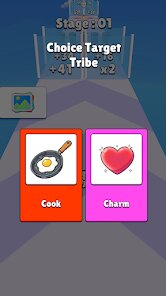
Life Run: Girl Growth is a mobile role-playing and life simulation game from developer PixelSeed that blends narrative-driven character development with idle and incremental mechanics. Think of it as a virtual coming-of-age journey where you guide a young girl through different stages of her life — from childhood to adulthood — making choices that influence her personality, skills, relationships, and career path. The core gameplay loop revolves around managing daily activities, upgrading attributes, and progressing through story events, all while the character grows autonomously in the background. It sits comfortably in the hybrid casual genre, appealing to players who enjoy relaxing simulation games like BitLife or The Sims Mobile, but with a lighter touch that doesn't demand constant micromanagement. It's particularly suited for casual gamers looking for a low-stakes, emotionally engaging experience, as well as fans of visual novels who appreciate branching narratives. What initially caught my attention was the game's charming pixel art style and the promise of a narrative that evolves based on player choices — a rarity in the often formulaic mobile market. Social buzz around its recent updates and positive reviews from simulation communities also piqued my curiosity.
I dove into Life Run expecting a simple time-waster, but I was surprised by how quickly I became invested. The early hours felt a bit slow, as the game eases you into its systems, but once I unlocked more activities and events, the experience opened up beautifully. Controls are intuitive — mostly taps and swipes — and performance on my mid-range Android device was smooth, with no noticeable lag or crashes. The learning curve is gentle, though the sheer number of stats and options can feel overwhelming at first. A standout moment for me was a birthday event where I had to choose between throwing a party, learning a new skill, or saving money; each choice led to a unique cutscene and long-term stat changes. That moment made me realize how much weight my decisions carried. The UI is clean and well-organized, though the text can be small on larger phones. Progression feels rewarding, as leveling up attributes unlocks new story chapters and side quests. I also discovered that putting the game in "idle mode" during my workday let me come back to meaningful progress, which kept me playing without feeling forced. One thing that boosted my immersion was customizing the girl's appearance and room decor — it added a personal touch that made me care more about her journey.
As someone who has played countless life sims and idle games, I stuck with Life Run because it does two things better than most: it makes every choice feel consequential, and it respects your time. In games like BitLife, choices often feel superficial, but here, I saw direct cause-and-effect — skipping school too often led to a lower education stat, which then limited my career options in adulthood. That depth kept me engaged. Compared to other mobile sims, Life Run also feels less predatory with its monetization; while there are optional purchases, I never hit a paywall that blocked essential content. The community aspect is minimal, but leaderboards for certain mini-games add a friendly competitive edge. What really works is the emotional payoff — when my character finally achieved her dream job after years of in-game effort, it felt earned. That said, it might not hook players who crave action or multiplayer, and the idle mechanics mean you're mostly watching growth rather than actively playing. Still, for fans of thoughtful simulation and narrative, this game offers a refreshingly heartfelt experience that stands out in a crowded mobile market.
Core Gameplay Features
- Choice-Driven Narrative 🌟 Every major life stage presents branching decisions that alter your character's stats, relationships, and story outcomes. This makes each playthrough feel unique and encourages replayability.
- Idle Progression System ⏳ When you're not actively playing, your character continues to improve skills and complete tasks automatically. You can collect rewards later, which fits perfectly into a busy lifestyle.
- Attribute and Skill Trees 🌱 Upgrade stats like intelligence, charm, health, and creativity through daily activities and mini-games. Unlocking higher tiers opens new career paths and social options, adding strategic depth.
Strengths & Highlights
- Emotional Storytelling 💖 The narrative genuinely made me care about the character's successes and failures. The writing is heartfelt without being overly melodramatic, and special events feel like real milestones.
- Meaningful Customization 🎨 You can change outfits, hairstyles, and home decorations extensively. It's not just cosmetic — some items boost certain stats, blending creativity with gameplay benefits.
- Balanced Monetization 💰 In-app purchases are limited to cosmetics and speed-ups. I never felt pressured to spend money to enjoy the core experience, which is rare in free mobile games today.
Limitations to Consider
- Repetitive Daily Tasks 🔁 After a few hours, the daily activities — like studying or working out — become predictable. More randomized events or surprise interactions would break the monotony.
- Slow Mid-Game Pace 🐢 Around the teenage years, progression stalls as you wait for stats to build up. This period could benefit from more engaging side stories or mini-games to keep momentum.
- Limited Social Interaction 🤝 The game has relationships with NPCs, but they feel scripted and shallow. Adding multiplayer features or deeper friend interactions would make the world feel more alive.
Recommended Apps
![]()
Gangster City: Mafia Crime
NitroTech Studio3.5

![]()
Shot Fx - Super power Video Fx
Southern Studio4.6![]()
Garten of Banban 6
Euphoric Brothers Games4.1![]()
Build A Queen
Supersonic Studios LTD4.4![]()
Fish It
Team-Rex0![]()
The Sims™ FreePlay
ELECTRONIC ARTS4.4![]()
Scary Teacher 3D
Z & K Games4.3![]()
Goat Simulator 3
Coffee Stain Publishing4.2![]()
Poppy Playtime Chapter 2
Mob Entertainment4.2![]()
Poppy Playtime Chapter 3
Mob Entertainment4.2![]()
Halloween - Coloring & Games
Orange Studios Games4![]()
Stumble Guys
Scopely4.2![]()
Foot Clinic - ASMR Feet Care
Coco Play By TabTale4.3![]()
Super Mario Run
Nintendo Co., Ltd.3.9![]()
Papa's Pancakeria To Go!
Flipline Studios4.6















You May Like
-
![]()
Roblox
Roblox Corporation4.4 -
![]()
Indian Bikes Driving 3D
Rohit Gaming Studio4.2 -
![]()
Idle Zombie Miner: Gold Tycoon
Royal Ark4.1 -
![]()
Quick Scratch Earn RBX
AppInnovator.Inc0 -
![]()
BMX Cycle Extreme Bicycle Game
PlayFlix4.7 -
![]()
Block Craft 3D:Building Game
Wildlife Studios4.5 -
![]()
Barbie Magical Fashion
Budge Studios4 -
![]()
Sprunki All Phases Beat Maker
Gotstar Studio0 -
![]()
Solitaire - Classic Card Games
Oakever Games4.7 -
![]()
Goods Puzzle: Sort Challenge™
FALCON GAMES4.8 -
![]()
Jurassic World™: The Game
Jam City, Inc.4.1 -
![]()
Water Match™- ASMR Water Sort
TAP GAMES4.8 -
![]()
Kpop Piano Beats - Music Game
Sonata Studio4.7 -
![]()
Coloring & Learn
Orange Studios Games4.2 -
![]()
Face Scan: Funny Test Filter
Braly JSC0