Animal Hospital: Anomaly Game
THEMA ARCHITECTS LIMITED
Installs
Developer
THEMA ARCHITECTS LIMITED
-
Category
Simulation
-
Content Rating
Teen
Developer Email
Privacy Policy
https://sites.google.com/view/thema-architects-limited-gmtr/home
Screenshots
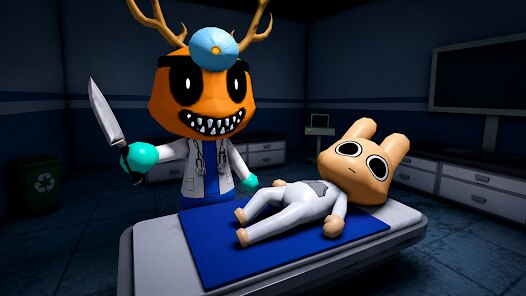
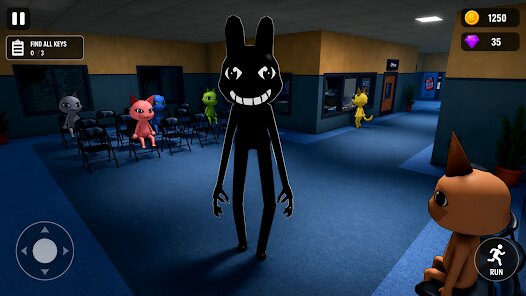
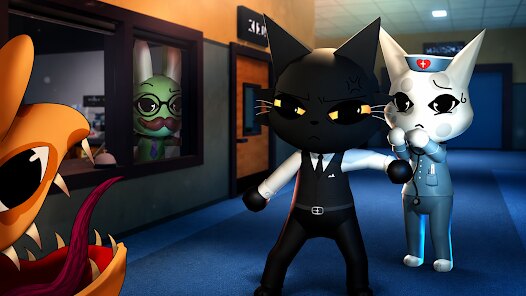
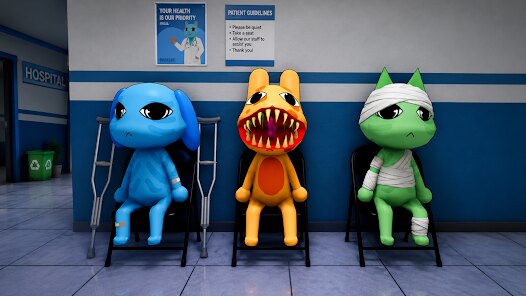
In-Depth Game Analysis
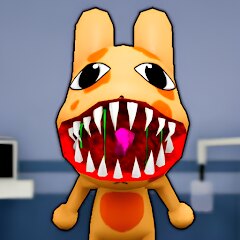
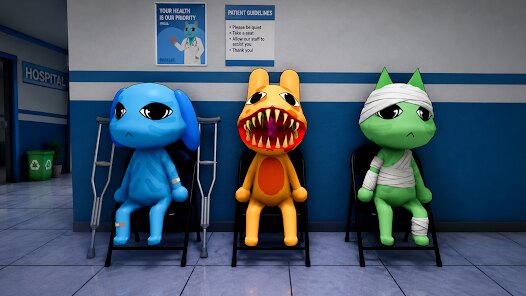
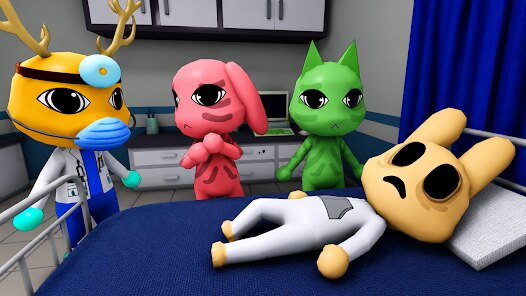
Animal Hospital: Anomaly Game caught my attention with its oddball premise: you are a newly hired veterinarian running a clinic for strange, glitchy creatures that seem to exist somewhere between a medical sim and a containment horror. The core loop is simple enough. Diagnose a patient, perform a quick treatment minigame, then decide whether to report or hide the anomalies you uncover. It is part management sim, part atmospheric puzzle, and part light jumpscare generator. That mix will appeal most to players who enjoy games like Five Nights at Freddy's but wish there were more paperwork and stethoscopes involved. Casual horror fans and streamers looking for reaction fodder will get the most out of it, while hardcore strategy players may find the systems too thin for long sessions.
My first hour was a slow burn. The tutorial throws you into a dim waiting room with a handful of tools and a vague instruction to "keep the animals stable." The controls are straightforward: point, click, drag, and occasionally hold a button to soothe a restless patient. Performance was smooth on a mid-range PC, though the UI felt cramped when several alerts popped up at once. What really stood out was the first major anomaly. A rabbit-like patient kept duplicating every time I turned my back, and the game never explicitly told me to stop the duplication. I had to infer it from a scribbled note in the break room. That moment exceeded my expectations because it trusted me to pay attention rather than follow a quest marker.
I kept playing because the atmosphere got under my skin in a way similar games rarely do. The sound design is excellent, especially the low hum that kicks in when an anomaly is nearby. Compared to other horror-tinged management sims, this one is less punishing and more curious. It does not rely on cheap jumpscares every five minutes, and there is no pay-to-win nonsense. What worked for me was the balance between routine tasks and sudden unease. I do think it might struggle to stand out because the treatment minigames become repetitive after a few hours, but for a short, strange ride, it earns its place.
Core Gameplay Features
- Anomaly Detection System 🔍: Each patient has subtle tells, like flickering textures or looping dialogue, and you must log them before they escalate. Miss too many, and the clinic shifts into a harder state.
- Treatment Minigames 💉: These range from steady-hand injections to matching symptoms with the right medicine. They are simple but add just enough pressure to keep you alert.
- Clinic Upgrade Tree 🏥: You can spend earnings on better lights, quieter rooms, and stronger locks. Upgrades feel meaningful because they directly reduce anomaly frequency or give you more reaction time.
- Branching Reports 📋: At the end of each shift, you choose what to tell your supervisor. Honesty unlocks harder cases; lies keep things calm but risk a sudden lockdown event.
Strengths & Highlights
- Genuine Unease Without Gore 😨: The game builds tension through sound and small visual wrongness, not blood. That makes it more unsettling for players who dislike explicit horror.
- Smart Pacing ⏳: Shifts are short, usually ten to fifteen minutes, so the game never overstays its welcome. You can play a few rounds and still feel like you made progress.
- Rewarding Observation 👀: Noticing a tiny detail, like a shadow that does not match its owner, and acting on it feels genuinely clever. The game respects your attention span.
Limitations to Consider
- Repetitive Mid-Game 🔁: After the first two hours, treatment minigames repeat with only minor variations. More patient types or random events would help.
- Limited Player Agency 🎮: Many anomaly outcomes are decided by hidden dice rolls rather than your choices. A clearer cause-and-effect system would reduce frustration.
- UI Clutter 📱: During busy shifts, alerts stack on top of each other and obscure the patient screen. A collapsible notification log or priority filter would fix this.
Recommended Apps
![]()
Camo Sniper
Supersonic Studios LTD4.3
![]()
Sprunki Funky Beat
Gotstar Studio4.7
![]()
Papa's Bakeria To Go!
Flipline Studios4.7![]()
Mob Control
VOODOO4.2![]()
Halloween Chronicles 4 f2p
Do Games Limited4.5![]()
MONOPOLY GO!
Scopely4.6![]()
Sonic Dash Endless Runner Game
SEGA4.7![]()
Airport City transport manager
Game Insight4.1![]()
IQ Test - IQ Arena
Neorem4.4![]()
Amazing Digital Game2D
CaterGames4.1![]()
Monster Studio: Music Beats
Tappy Game3![]()
Christmas Jigsaw Puzzle Games
LoveColoring Game4.9![]()
AFK Arena
LilithGames4.6![]()
The Survival Hunter Games 2
Aeria Canada4.2![]()
Space shooter - Galaxy attack
1SOFT4.8











You May Like
-
![]()
Sprunki Beat: Full Mod Music
Gotstar Studio4.7 -
![]()
Bluey: Let's Play!
Budge Studios4.1 -
![]()
Fruit Ninja®
Halfbrick Studios4.5 -
![]()
Garten of Banban 7
Euphoric Brothers Games4.3 -
![]()
Five Nights at Freddy's 2
Clickteam USA LLC4.6 -
![]()
STAR: Super Tricky Amazing Run
CASUAL AZUR GAMES4.2 -
![]()
Airport City transport manager
Game Insight4.1 -
![]()
Draw 2 Save: Stickman Puzzle
WONDER GROUP4.3 -
![]()
Color Pencil Run: Drawing Game
OSA Studio4.1 -
![]()
YOYO Decor: Dress Up Games
YoYo Dress Up Games4 -
![]()
Go Fish It
Koci Game0 -
![]()
Mario Kart Tour
Nintendo Co., Ltd.4.3 -
![]()
K-Pop Ringtones
AppsJag0 -
![]()
Going Up Rooftop - Parkour 3D
GenI Games3 -
![]()
Honkai: Star Rail
COGNOSPHERE PTE. LTD.4.3