
Cube Escape Collection
Rusty Lake
Installs
5M+
Developer
Rusty Lake
-
Category
Strategy
-
Content Rating
Teen
Developer Email
Privacy Policy
https://www.rustylake.com/privacy-policy/
Screenshots
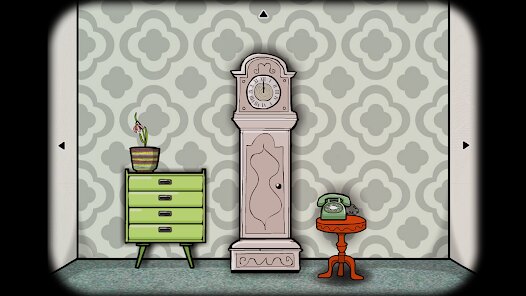
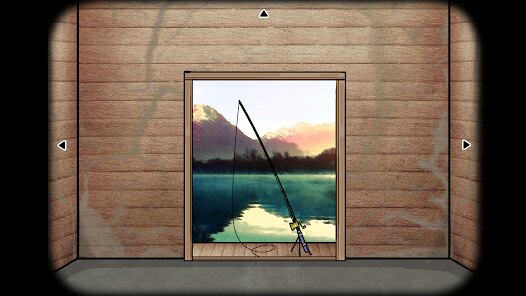
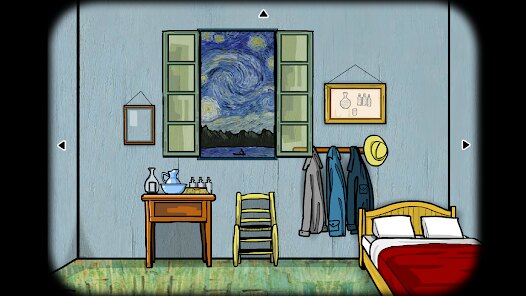
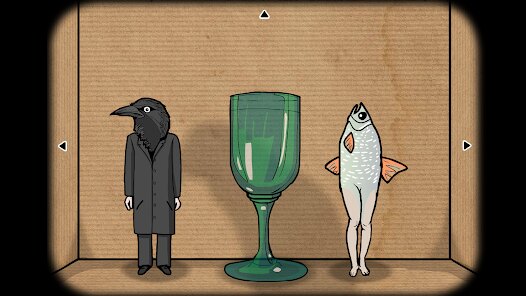
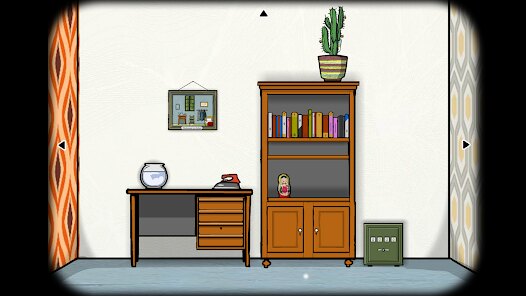
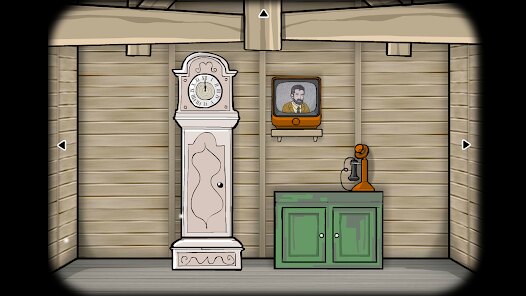
In-Depth Game Analysis
Cube Escape Collection isn't just another point-and-click puzzle game; it's a surreal, narrative-driven trip through the twisted mind of Rusty Lake. At its core, it bundles the first nine chapters of the Cube Escape series, weaving a fragmented story about murder, memory, and reincarnation, all set against a backdrop of eerie, 20th-century Americana. The core loop is simple: explore a confined, hand-drawn room, interact with bizarre objects, solve cryptic puzzles to collect tiny cubes, and use those cubes to unlock fragmented memories that push the overarching mystery forward. Genre-wise, it's a pure adventure/puzzle hybrid, and it will absolutely appeal to anyone who loves atmospheric storytelling, fans of games like "The Room" or "Stanley Parable," and players who appreciate a good dose of Lynchian weirdness without needing twitch reflexes. What initially hooked me wasn't the hype, but the distinct, unsettling art style—those flat, pastel colors and dead-eyed characters in promotional screenshots felt like a dark comic book come to life, promising something more peculiar than your average mobile fare.
My first session with the collection was a slow burn, and honestly, it took about two chapters before I truly felt the pull. The controls are standard for the genre—tap to interact, drag to combine items—and they work flawlessly on a touchscreen, though they translate just as well to a mouse. The learning curve isn't about mechanical difficulty but about breaking your logical assumptions. For example, in one chapter, I spent ten minutes trying to unlock a safe with a number code, only to realize the solution was hidden in the pattern of a fly's wings and the cuckoo clock's chime. That moment of "aha" followed by "what the hell am I playing?" is exactly where the game shines. What truly stood out was the parallax background in the theatre chapter, where the characters twitch and move as you tap around; it gave the static scenes a haunting, breathing quality that deeply enhanced immersion. I also found that playing with headphones is non-negotiable, as the subtle audio cues—a ticking clock, a distant scream, a creaking floorboard—are half the atmosphere. After a few chapters, I started jotting down symbols and numbers in a notepad, realizing the progression system rewards careful observation over frantic tapping, which turned the experience into a detective's ritual.
Comparing it to other puzzle collections like "The Tiny Room" or "Adventure Escape," I kept coming back to Cube Escape because of its uncompromising weirdness. Many similar games pad their length with fetch quests or generic "find three keys" filler, but here, every puzzle is a piece of a larger, nonsensical narrative that actually respects your intelligence. The lack of ads and the absence of any pay-to-win mechanic—you pay once and get everything—is refreshing in a mobile landscape riddled with microtransactions. But the real reason it stands out is the consistent quality of its world-building. Each chapter, while self-contained, plants seeds for the next, and the way the collection ties the nine chapters together with a shared glossary of recurring symbols (the white cube, the crow, the lake itself) creates a sense of cohesive discovery that a standalone game rarely achieves. It's not for everyone—if you need clear objectives or a happy ending, you'll be lost—but for those who enjoy piecing together a cryptic jigsaw puzzle where the final picture is a bloodstained portrait, it's pure gold. I kept playing because it made me feel clever in a way that's rare, and that's a reward in itself.
Core Gameplay Features
- Cube Collection System 🔲: Each chapter gives you a series of white cubes. Collecting them isn't just for score; each cube triggers a short, surreal memory scene that expands the lore. It's a clever way to gate story progression, making you solve the room fully before moving on.
- Inventory & Combining 🧩: You have a limited item slot at the bottom, and you can drag and drop objects onto each other. This is where the game's logic shines—combining a hammer with a nail isn't obvious, but combining a human tooth with a vial of blood to make a potion is exactly the kind of madness you'll encounter.
- Environmental Puzzles 🕰️: The rooms are interactive dioramas. You can pull levers, open cabinets, and even rotate a phone dial, with every action having a ripple effect on the audio or visual state. The puzzles often use hidden states, like turning a lamp on to reveal invisible ink, which keeps the exploration tense and rewarding.
- Chapter Select & Continuity 📖: The collection offers a linear chapter-select screen, but symbols and items from earlier chapters subtly reappear in later ones, rewarding players who pay close attention. It's not just a random bundle; it's a curated journey with a structural flow.
- Achievement System 🏆: Aside from trophies, the game tracks your "mind" level based on how many puzzles you solve without hints. This adds a light replayability layer, pushing you to be more observant and less reliant on guesswork on a second playthrough.
Strengths & Highlights
- Atmospheric Mastery 🎭: The sound design and muted color palette create a genuinely oppressive yet beautiful mood. The way a single piano note echoes when you solve a puzzle, paired with the slight camera zoom, feels both rewarding and unsettling. It's a rare game that makes me feel anxious in the best way.
- Fairly Casual Depth 🧠: Despite its weirdness, the puzzles are surprisingly fair. They are challenging enough to make you feel smart but rarely require outside logic. The game gives you visual clues in the environment, so when you solve a tough one, the satisfaction is pure, not frustration-relief.
- No Filler 💎: Every chapter is short and punchy, lasting 15-30 minutes. This respects your time, letting you complete a full arc in one sitting without stretching content thin. It's a focused, dense experience that doesn't outstay its welcome.
- Cross-Platform Consistency 📱: I played on my phone and my PC, and the experience is identical. The art assets scale perfectly, and the touch controls are just as precise as a mouse, which is a testament to the game's optimization. This made it easy to pick up wherever I left off.
Limitations to Consider
- Occasional Obscurity 🚫: A few puzzles rely on extremely obscure pop-culture or temporal references (like a specific date in a newspaper or a bizarre rhyme). For a first-time player without a guide, this can stall progression and feel more like a guess than a deduction, breaking immersion.
- Lack of In-Game Hint System 💭: You have a hint option, but it's hidden behind a menu and only gives vague text like "Look at the clock." For casual players, this is insufficient, and the frustration might overshadow the fun in later chapters where the difficulty spikes unexpectedly.
- Slight Repetitive Pattern 🔄: While the narrative is fresh, the core mechanic of "collect three cubes" repeats across all nine chapters. If you binge-play, you might feel a sense of déjà vu in the puzzle structure, which can dull the initial shock value.
- No Voice Acting 🎤: The characters communicate via text and sound effects only. While this preserves the eerie silence, some dramatic moments feel less impactful without a vocal performance, especially for players who prefer a more cinematic experience.
Recommended Apps
![]()
BGMI: Online Multiplayer Game
KRAFTON, Inc.4.4
![]()
Shape Transform: Shifting Car
Rebel Actions4.5
![]()
Hair Salon Fashion for Girl
Happy Run3.3![]()
ZooTone: Animal Voice Fun
JUP Game Studio4.5![]()
Chapters: Interactive Stories
Crazy Maple Studio Dev4.4![]()
Gabbys Dollhouse: Games & Cats
Play Piknik4.1![]()
Going Balls
Supersonic Studios LTD4.3![]()
Zootopia Crime Files
Disney4.2![]()
Sword Play! Ninja Slice Runner
CASUAL AZUR GAMES4.6![]()
Sonic Dash Endless Runner Game
SEGA4.7![]()
IQ test
Digerati.CZ3.8![]()
SAKURA School Simulator
GARUSOFT K.K.4.4![]()
Temple Run 2: Endless Escape
Imangi Studios4.2![]()
Kingshot
Century Games PTE. LTD.4.5![]()
Hole.io
VOODOO3












You May Like
-
![]()
Mega Truck Simulator Games 3D
GamePark4.4 -
![]()
LEGO® DUPLO® Peppa Pig
StoryToys4.2 -
![]()
Cube Escape Collection
Rusty Lake4.6 -
![]()
Gugu Gaga Penguin: Mini Games
Kids Games LLC3 -
![]()
Asphalt 9: Legends
Gameloft SE4.4 -
![]()
Color Oasis - Color by Number
Tap Color Studio4.8 -
![]()
Hay Day
Supercell4.4 -
![]()
Meme Hunters: Hide & Seek
playducky.com4.4 -
![]()
Face Scan: Funny Test Filter
Braly JSC0 -
![]()
I Am Cat
Estoty4.5 -
![]()
Monster Remix Beat Maker
Brocker Bus Studio3.4 -
![]()
Cute Cat Care and Babyshower
Lion Roar4.4 -
![]()
Pou
Zakeh4.3 -
![]()
DriveCSX Car Crash Simulator
Studio WW Games4.2 -
![]()
Block Blast!
HungryStudio4.8