
Episode - Choose Your Story
Episode Interactive
Installs
100M+
Developer
Episode Interactive
-
Category
Simulation
-
Content Rating
Teen
Developer Email
Privacy Policy
https://home.episodeinteractive.com/privacy
Screenshots





In-Depth Game Analysis
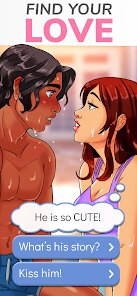
Episode - Choose Your Story is a mobile interactive storytelling platform that blends visual novel elements with choose-your-own-adventure mechanics, falling squarely into the narrative RPG and casual gaming genres. The core loop is simple: you pick a story, read through chapters, and make choices that influence the plot, relationships, and outcomes. The app offers a mix of official, professionally written stories and a massive library of user-generated content, covering everything from romance and drama to fantasy and mystery. This game is a perfect fit for casual gamers who love immersive storytelling, romance enthusiasts, and anyone who enjoys shaping their own narrative without heavy action or complex strategy. I was initially drawn in by the sheer hype around its community-driven model—watching trailers and reading reviews about how players could craft their own episodes felt like a creative playground for writers and readers alike, and the colorful, anime-inspired visual style sealed the deal.
Diving into my personal playthrough, I found the fun was almost immediate, though the sheer volume of story options can be overwhelming at first. The controls are intuitive—tap to read, swipe to choose—and the performance on my mid-range Android was smooth, with quick load times and no crashes. The learning curve is gentle, but the real depth comes from understanding how your choices ripple through the story. One moment that stood out was in an official drama story where my decision to stand up a romantic interest for a friend led to a completely unexpected betrayal arc, altering the entire second half of the season. It felt genuinely rewarding, not like a simple “good vs. bad” binary. The UI is clean but can get cluttered with gem (premium currency) prompts, which sometimes breaks immersion. To get the most out of the game, I found that downloading community stories with high “likes” and positive reviews often delivered richer, less restrictive narratives than official ones, as fans seem to experiment more with branching paths and character depth.
As someone who has played similar interactive story games like Choices, Chapters, and Love Island, I stuck with Episode because of one standout advantage: the user-generated content feels fresh and unrestricted. In Choices, for example, I often felt railroaded into specific outcomes unless I paid up, but Episode's community stories frequently reward clever choices with meaningful divergences, and many creators offer complete stories without requiring diamonds. The game's social features, like reading stories from friends or following popular writers, also add a layer of community that other games lack. What really worked for me was the customization—both of my avatar and, in some stories, the plot itself. It made me feel like I wasn't just clicking through a book but actually influencing a living world. That said, the official stories can feel formulaic, and the constant gem prompts for premium choices can frustrate free-to-play players. Still, Episode's core strength is its democratization of storytelling, and that alone makes it stand out in the crowded visual novel market.
Core Gameplay Features
- Choice-driven narratives 🧩: Every story presents you with decisions—from small dialogue options to major plot twists—and your choices directly affect the story's direction, relationships, and ending. This isn't just a linear reading experience; you genuinely shape the tale, much like a role-playing game but without the stats. The branching can be subtle or dramatic, keeping you on your toes.
- User-generated content hub 📝: The game boasts a massive library of stories created by the community, accessible through a search and rating system. You can read, write, and even style your own episodes using the in-game creation tools. This feature is what sets Episode apart—it's not just a game but a platform for aspiring writers to share their work.
- Customizable avatar system 🎨: Before diving in, you can design your character's look, including hair, eyes, outfits, and accessories. Some official and community stories even let you carry this avatar into the narrative, making you feel like a personalized protagonist rather than a pre-set shell. It's simple but effective for immersion.
Strengths & Highlights
- Deep community engagement 🌍: The ability to create and share your own stories is a game-changer. I spent hours not just playing but also exploring the writing tools, and the sheer variety keeps the game fresh. Reading stories from friends or trending creators feels like a living, breathing library that evolves daily.
- Rewarding choice consequences 🎭: Unlike many visual novels where choices feel cosmetic, Episode often delivers real consequences that surprised me. One decision in a fantasy story to spare a villain led to that character becoming a key ally later, which made me reconsider my usual “kill everything” approach. It's this unpredictability that keeps me coming back.
- Accessible and low-stress fun 🕹️: The game requires no grinding, reflexes, or strategic planning—perfect for unwinding after a long day. You can pick up a story, make a few choices, and put it down without losing progress. The tap-to-read mechanics are so smooth that I often play while commuting or during breaks.
Limitations to Consider
- Aggressive microtransaction prompts 💸: The constant reminders to spend gems or passes for premium choices can feel like a cash grab, especially in official stories. I've had moments where a cool outfit or a key dialogue option was locked behind a paywall, pulling me out of the story and making me feel like a second-class player. It's not pay-to-win, but it is pay-to-enjoy at times.
- Inconsistent writing quality 📉: While community stories are a highlight, they're also a double-edged sword. Many have poor grammar, cliché plots, or broken branching logic. It can take a lot of digging to find gems among the junk, which wasted my time when I just wanted a good read. Official stories are polished but often predictable.
- Limited replay value for linear stories 🔄: Even with branching choices, many official stories funnel you toward a predetermined ending, reducing the incentive to replay. Once I've seen the main arc, I often feel little pull to revisit unless a story genuinely offers major divergent paths—which is rarer than I'd like.
Recommended Apps
![]()
Indian Bikes Driving 3D
Rohit Gaming Studio4.2
![]()
Gabbys Dollhouse: Games & Cats
Play Piknik4.1![]()
Teacher Life Simulator
Famous Good Games4.2![]()
Little Nightmares
Playdigious4.4![]()
Dude Theft Wars FPS Open world
Poxel Studios Games4.3![]()
Spatial Touch™
VTouch, inc.3.7
![]()
Skin Maker & 3D Editor
Pixelvoid Games Ltd4.5![]()
Truck Games - Driving School
Better Games Studio Pty Ltd4.1![]()
Squid Game: Unleashed
Netflix, Inc.4.4![]()
Hide in The Backrooms: Horror
CASUAL AZUR GAMES3.8![]()
Fortnite
Epic Games, Inc4![]()
Toca Boca World
Toca Boca4.3![]()
Creepy Clown - Circus Escape
Maxim Ten4![]()
Doll Diary: Kpop Dolly DIY
NEXCOSMO4.8![]()
IQ: The Impossible Quiz
Incradiator Games0










You May Like
-
![]()
Dude Theft Wars FPS Open world
Poxel Studios Games4.3 -
![]()
Gangster City: Mafia Crime
NitroTech Studio3.5 -
![]()
Obby Survival Parkour Game
PLAYTRICKS STUDIO LLC0 -
![]()
Five Nights at Freddy's
Clickteam USA LLC4.7 -
![]()
My Singing Pet: Pop Piano Game
PulseBeat Studios4.6 -
![]()
Warpath: Ace Shooter
LilithGames4.1 -
![]()
Save the Doge
WONDER GROUP4.2 -
![]()
FamilySearch Africa
FamilySearch International0 -
![]()
Skins For Roblox Clothes
uschultz4.6 -
![]()
Bloons TD Battles
ninja kiwi4.3 -
![]()
Grow a Garden: Farm & Relax
MiniPoP Games2.2 -
![]()
Vortella's Dress Up
Devortel4 -
![]()
MementoMori: AFKRPG
Bank of Innovation, Inc.4.5 -
![]()
Beam Drive Crashes Original 3D
CrashTime4.2 -
![]()
Swamp Attack
Outfit7 Limited4.6