Face DNA: AI Ethnicity Test
Ineptlyawesome
Installs
100K+
Developer
Ineptlyawesome
-
Category
Entertainment
-
Content Rating
Everyone
Developer Email
Privacy Policy
https://facedna.app/privacy
Screenshots
Expert Review
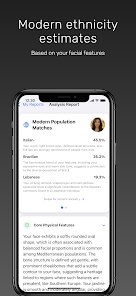
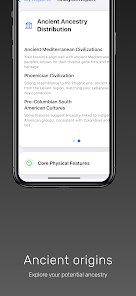
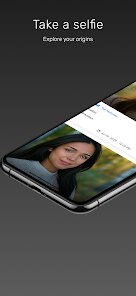
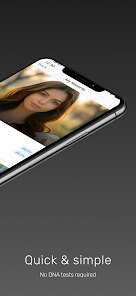
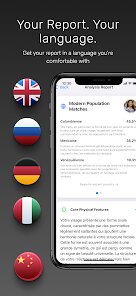
Face DNA: AI Ethnicity Test takes a straightforward concept - using facial analysis to estimate ethnic background - and wraps it in a deceptively polished interface. The app asks for a single selfie, then runs it through a neural network that maps facial features against a database of regional populations. What comes back is a percentage breakdown across several global regions, along with a few speculative notes about facial symmetry and feature prominence. The whole process takes under a minute, which is impressive for what is happening under the hood.
The target audience here is clearly the casually curious. This is not a genealogy tool like 23andMe, and it makes no claim to be one. It will not confirm your great-grandmother's village in County Cork. What it does is offer a light, entertaining guess based on visual markers alone. For that purpose, the core functionality works reliably. The scan itself is fast, the results feel substantive enough to hold attention, and the included distance-to-region percentages add a layer of detail that goes beyond a simple "you look Mediterranean." I personally tested it with a few different photos under different lighting, and the results stayed fairly consistent. That consistency gave me more confidence in the underlying model than I initially expected.
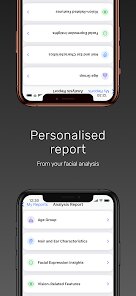
The extra features, like a "face symmetry score" and a "facial feature breakdown," are pleasant additions rather than gimmicks. They do not bloat the experience or obscure the main function. I found the symmetry score oddly motivating, like a mini-assessment that carries just enough weight to make you try a better photo. Where this app earns its keep, though, is in social settings. If you need a conversation starter at a party or a way to settle a silly bet among friends, this delivers. I would recommend it to anyone who enjoys light data-driven entertainment, but I would caution against interpreting any result as factual. For that niche, the app hits its mark.
Key Functional Highlights
- 💡 Regional breakdown with percentages - The app provides a clear visual split of your estimated origins across major global regions. Rather than a single guess, you see a ranked list, which feels more nuanced and less like a blind stab.
- 💡 Facial feature analysis - Beyond ethnicity, the app highlights specific features like eye spacing, jawline width, and nose shape. These are tied back to the regional predictions, which adds a layer of internal logic that makes the results feel more grounded.
- 💡 Comparison history - The app stores your past scans, so you can track how results shift with different photos, angles, or lighting. This is a small touch, but it turns a one-off gimmick into something you can revisit and play with over time.
Advantages & Benefits
- ✅ Fast processing - Results appear in roughly ten seconds from photo upload to full breakdown, with no noticeable lag or server wait.
- ✅ Consistent output - Re-testing with similar photos yields stable results, which suggests the underlying model is not just random guesswork.
- ✅ Clean, minimal interface - The design is intuitive, with no ads cluttering the screen or trying to trick you into accidental taps.
Areas for Improvement
- ❌ Accuracy is inherently limited - The app only reads visual markers, so it misses the entire genetic story that comes from ancestry. A person adopted from another region could easily get a result that feels completely off to them.
- ❌ No explanation of methodology - There is no source listed for the training data or the population references, which leaves a lingering question about bias in the model.
- ❌ Privacy concerns - The photos are stored on their servers for the comparison history to work, and the privacy policy is vague about how long that data is retained or whether it is used for model retraining.
Recommended Apps
![]()
AR Draw Sketch - Trace & Paint
MØ Studios0
![]()
Google Gemini
Google LLC4.6
![]()
Heaven: Gay & LGBT+ Dating
Paradiz Social Ltd3.2![]()
Thumb Dance Challenge
GAdventure4.1![]()
PayPal - Send, Shop, Manage
PayPal Mobile4.3![]()
Upside: Gas & Food Cash Back
Upside Inc.4.5![]()
Call Santa Claus & Prank Call
WELLY GLOBAL PUBLISHING3.5![]()
DramaBox - Stream Drama Shorts
STORYMATRIX4.6![]()
Tubi: Free Movies & Live TV
Tubi TV4.7![]()
Funny Ranking Filter Challenge
TriverSoft0![]()
Afterpay - Buy Now Pay Later
Afterpay3.8![]()
Medic Scanner - skin analyze
Investment Analytics3.7![]()
PictureThis - Plant Identifier
Glority Global Group Ltd.4.6![]()
Monster Detector: Alien, Ghost
Game Palette3.8![]()
Fingerprint Scanner App
Zen Solutions Apps4.1












You May Like
-
![]()
Rezona: Make Memeplays
Stratava Group4.1 -
![]()
Genral Tv | Video Player
elmahdy apps4.4 -
![]()
Zangi Private Messenger
Secret Phone, Inc4.2 -
![]()
Video call Elssa
TOSSINGAME LTD0 -
![]()
Zodiac & Horoscope: CosmicVibe
Mysterious Apps LLC4.7 -
![]()
Call Mirabel Encanto Fake Chat
Brovo developer4.6 -
![]()
Zodiac Palm Reader: MagicWay
Reatility Media4.6 -
![]()
GigaBody: AI Muscle filter
Bellential Inc.4.4 -
![]()
Face DNA: AI Ethnicity Test
Ineptlyawesome4 -
![]()
Secret Crush Detector App
Hopeitz Software4.8 -
![]()
Nebula: Horoscope & Astrology
OBRIO3.5 -
![]()
Flipped:Chat with AI Character
First Group pte ltd4.1 -
![]()
Amazon Shopping
Amazon Mobile LLC4.1 -
![]()
Prank Call: Fake Video Prank
MoranJiyounge3.7 -
![]()
Spotify: Music and Podcasts
Spotify AB4.3