
Anime Sprint
PixelSeed
Installs
Developer
PixelSeed
-
Category
Casual
-
Content Rating
Everyone
Developer Email
Privacy Policy
https://pixelseed.co.kr/privacy.html
Screenshots

In-Depth Game Analysis
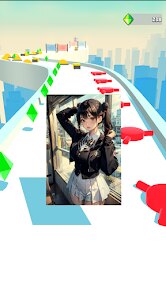
Anime Sprint is a free-to-play mobile runner that blends the endless dash genre with gacha mechanics and a vibrant anime aesthetic. Developed by PixelSeed, the core gameplay loop involves controlling a character who automatically sprints through a series of stylized, procedurally generated stages, dodging obstacles, collecting currency, and chaining combos to build speed. It sits at the intersection of arcade action and light role-playing game progression, making it a natural fit for casual gamers who enjoy quick sessions, as well as fans of anime art styles and collection-based systems. What initially caught my attention wasn't just the glossy, cel-shaded trailers, but the promise of "squad-based running" — the idea that you could switch between multiple characters mid-run, each with unique abilities. The social buzz on TikTok was hard to ignore, with clips of flashy ultimate moves and near-miss obstacle clears going viral. It felt like a fresh spin on a tired formula.
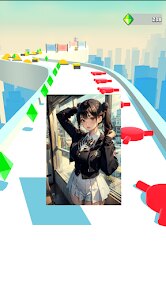
Jumping in, the fun was almost immediate. The controls are elegantly simple: swipe left or right to change lanes, swipe up to jump, and swipe down to slide. There is no virtual joystick or complex button mapping, which keeps the focus squarely on reflex and timing. Performance on my mid-range Android device was buttery smooth at 60 frames per second, with no noticeable stutter even during hectic sections. The learning curve is shallow enough for anyone to pick up in minutes, but deeper mechanics — like perfect-timing a lane switch to trigger a character's passive ability — reward practice. One moment that stood out happened during a boss chase sequence in world three, where I had to chain wall-runs, slides, and a character swap to avoid a collapsing bridge while the boss hurled projectiles. It felt like a scripted event from a premium console game, not a free mobile title. The UI is clean and readable, though the constant barrage of event banners and limited-time shop pop-ups can ruin immersion. A tip I learned: disabling the auto-collect gem magnet in the settings menu forces you to steer into gems manually, which builds better muscle memory for tight corridors.
As someone who has reviewed dozens of mobile runners, from Temple Run to Sky Force Reloaded, I stuck with Anime Sprint because it solves a core problem most endless runners suffer from: repetition. The squad-switching mechanic introduces real tactical depth; you are not just reacting, but planning which character to tag in for a speed boost or a shield. It also handles monetization better than most gacha games. While you can buy premium currency for pulls, the rate of earning free draws through daily missions and milestone rewards is generous enough that I never felt locked out of new content. Compared to competitors like Dragon Ball Legends or Genshin Impact's mobile counterpart, Anime Sprint is far less punishing for free-to-play players. The progression system — unlocking new tracks, cosmetics, and character upgrades — feels earned rather than bought. What really worked for me is the sense of community: leaderboards are tiered by gear score, so you compete against similarly progressed players, not whales. It may not have the narrative depth of a role-playing game, but for pure, satisfying loop-driven action, it carves its own lane.
Core Gameplay Features
- Skill-Based Character Switching 🌀: You can swap between three chosen characters mid-run with a simple tap, each triggering a unique active ability (like a temporary shield, a speed burst, or a magnet for coins). This adds a layer of strategy beyond just dodging — you must decide when to burn a cooldown for maximum effect during obstacle clusters or boss phases.
- Procedural Track Variation 🎢: Each run generates a different mix of straightaways, zigzag lanes, and vertical wall-runs. The algorithm also introduces themed hazards per world — ice floors, lava gaps, or teleport pads — so the same stage never plays exactly twice, keeping the grind fresh.
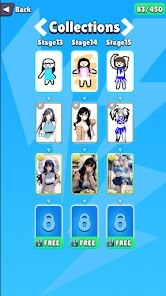
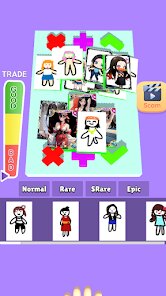
- Gacha-Based Squad Building 🎁: Characters are obtained through a standard gacha banner using gems earned in-game. Each character has a rarity tier, a passive stat bonus, and a signature ultimate that charges over time. Duplicate pulls upgrade their star level, which scales base stats and unlocks new cosmetic variants.
Strengths & Highlights
- Fluid and Responsive Controls ✅: The swipe inputs register instantly with zero lag, and the character's hitbox is generous without being forgiving. This makes near-miss plays feel satisfyingly precise, and I never lost a run to unresponsive touch detection.
- Generous Free-to-Play Economy 💎: Daily login bonuses, weekly challenge tracks, and milestone rewards hand out enough premium currency for a ten-pull every few days. I have unlocked three S-tier characters without spending a cent, which is rare in this genre.
- Visually Striking Art Style 🎨: The cel-shaded graphics are crisp, with vibrant particle effects and fluid character animations that evoke high-quality anime openings. Each world has a distinct color palette — from neon cyberpunk streets to cherry blossom gardens — that keeps the backdrops from feeling stale.
Limitations to Consider
- Repetitive Ad Integration 📺: After every three runs, a forced full-screen video ad plays unless you watch a shorter offer to skip it. This interrupts the flow, especially during high-score attempts, and feels intrusive compared to opt-in reward ads seen in other mobile titles.
- Overwhelming Menu Clutter 🗂️: The home screen is packed with timed events, battle passes, shop tabs, and a social feed. Navigating to the character upgrade screen or the main story mode requires clicking through multiple pop-ups, which can confuse new players and slow down quick sessions.
- Limited Endgame Content 🛑: Once you complete the five main worlds and max out a handful of characters, the only long-term activity is climbing the weekly leaderboard. There is no raid mode, co-op runs, or player-versus-player mode to sustain interest beyond the first month.
Recommended Apps
![]()
Halloween: Secret of Shadow
HFG Entertainments4.5

![]()
Disco Fighter: Dead Fight Club
Wawe Technology0![]()
Swamp Attack
Outfit7 Limited4.6![]()
Monster Craftsman Survivor 3D
DINO GAME4.7![]()
Smashero.io - Hack n slash RPG
KLASH Games Inc.4.7![]()
Slice Master : Idle Clicker
Oreon Studios4.6![]()
MECCHA CHAMELEON
PlayLand Studio0![]()
Garten of Banban 2
Euphoric Brothers Games4![]()
Bike Race: Racing Game
iKame Games - Zego Studio4.6![]()
Hapunan Horror Game
2002 Studio4.3![]()
MiniGiants.io
Night Steed S.C.4.4![]()
Peppa Pig by PlayShifu
PlayShifu3.2![]()
Squishy Magic: ASMR Toy Maker
Dramaton4.6![]()
Gangster Simulator Crime Game
Orbit Games Pvt Ltd3.3![]()
Squid Game: Unleashed
Netflix, Inc.4.4








You May Like
-
![]()
IQ Test
Aliaksandr Uvarau4 -
![]()
MONOPOLY GO!
Scopely4.6 -
![]()
Race Master 3D: Car Racing
Beresnev Games4.5 -
![]()
Steal a Brainbot
finik0 -
![]()
World of Peppa Pig: Kids Games
Find Your Fun3.4 -
![]()
Minefun İo
3Dmobiles0 -
![]()
Stealth Master: Assassin Ninja
SayGames Ltd4.3 -
![]()
Witch Match Puzzle: Halloween
JULYis4.6 -
![]()
My Talking Angela 2
Outfit7 Limited4.4 -
![]()
Haunt the House: Terrortown
SFB Games4.9 -
![]()
Solo Survivor IO Game
FALCON GAME4.7 -
![]()
Arknights
Yostar Limited.4.5 -
![]()
Chapters: Interactive Stories
Crazy Maple Studio Dev4.4 -
![]()
ZooTone: Animal Voice Fun
JUP Game Studio4.5 -
![]()
eFootball™
KONAMI4.2