Geometry Dash Meltdown
RobTop Games
Installs
100M+
Developer
RobTop Games
-
Category
Adventure
-
Content Rating
Everyone
Developer Email
Privacy Policy
http://www.robtopgames.com/privacy
Screenshots
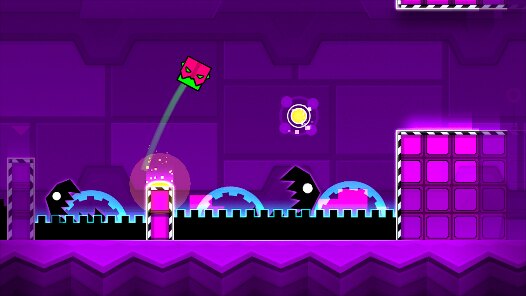
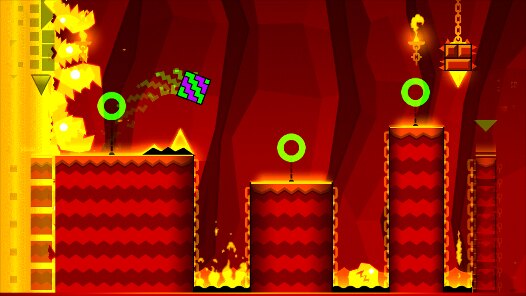
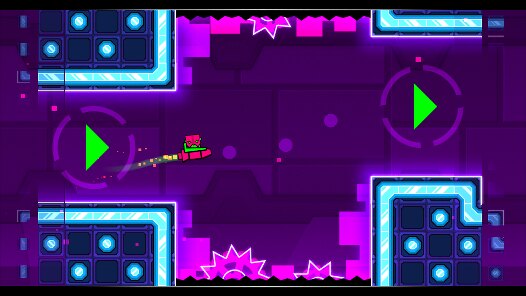
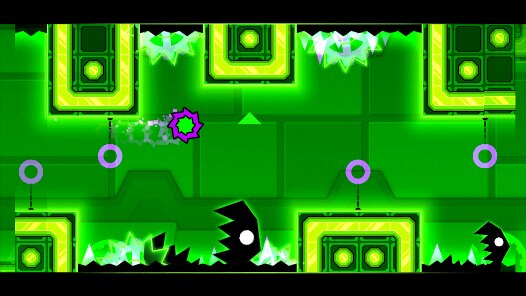
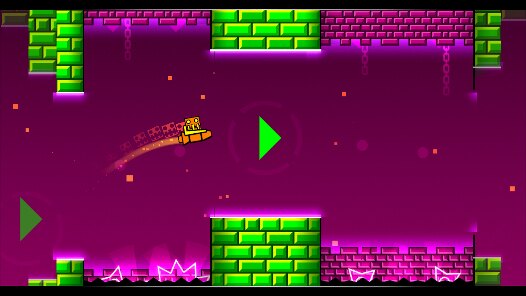
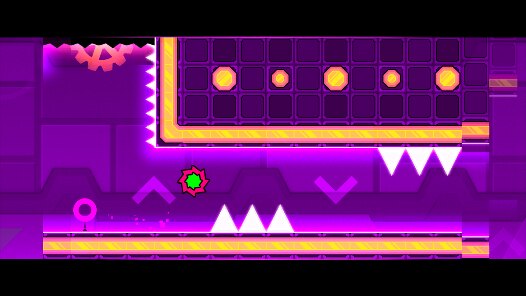
In-Depth Game Analysis
Geometry Dash Meltdown is a rhythm-based platformer that distills the core of the original Geometry Dash into a standalone, bite-sized experience. It belongs to the precision platformer genre, where timing and memorization are everything, and it specifically caters to players who thrive on tough-as-nails challenges and rhythmic synchronization. If you are a fan of hardcore platformers like Super Meat Boy or the endless runner genre with a musical twist, this game is for you. I initially downloaded it after hearing constant buzz from friends who loved the main game but mentioned this free version offered a perfect entry point. The vibrant, geometric art style and heart-pumping soundtrack caught my attention immediately, promising a test of reflexes that felt both accessible and brutally demanding.
My personal gameplay experience was a rollercoaster of frustration and triumph. It was not fun right away; the first level, "The Seven Seas," threw me into a chaotic rhythm of jumps and obstacles that I failed repeatedly for the first twenty minutes. The controls are tight and responsive, with simple one-tap input for jumping and flying, but the learning curve is steep because one mistake sends you back to the start. What stood out was a moment in the second level, "Viking Arena," where the beat of the music synced perfectly with a series of tight jumps. I managed to nail a section on my tenth try, feeling the flow as my taps matched the bass drops. The UI is clean and minimal, which helps immersion, but the lack of a practice mode made the trial-and-error process feel punishing at times. I found that muting everything except the music and focusing solely on the visual cues from the level design enhanced my experience, turning each failure into a learning opportunity rather than a setback.
Having played similar games like "Bit.Trip Runner" and "Super Hexagon," I continued with Geometry Dash Meltdown because it nails the satisfying loop of gradual mastery. Unlike many rhythm games that rely on unlocking content or grinding for upgrades, this game is purely skill-based. There is no pay-to-win mechanic or progression system that gatekeeps levels; you just play and improve. What really worked for me was the sheer density of the challenge: each level feels like a puzzle of reflexes, and the immediate feedback of restarting within seconds keeps you hooked. It does not stand out in terms of content volume—only three levels and a secret one—but it excels in execution. The music integration is flawless, making the fail state feel less punishing because the track restarts with a fresh energy. For hardcore fans, this is a polished appetizer, but casual players might find the difficulty spike too abrupt to enjoy without the main game's extensive training tools.
Core Gameplay Features
- One-tap controls 🎮: The entire game revolves around a single tap to jump or fly, with no complex button combinations. This simplicity makes it easy to learn but incredibly hard to master, as each input must be perfectly timed to the music and obstacles. It rewards precision over speed, turning every play session into a test of muscle memory.
- Three main levels 🎵: "The Seven Seas," "Viking Arena," and "Airborne Robots" each come with distinct electronic soundtracks that dictate the rhythm of obstacles. The levels feature different themes and difficulty progressions, starting with straightforward jumps and evolving into intricate patterns with portals that change gravity or speed. The music syncs perfectly, making the experience feel like a dance rather than a platformer.
- Secret reward level 🕵️: After collecting all 15 hidden coins across the three levels, you unlock a secret level called "Cycles." This is an older track from the main Game, repurposed here as an Easter egg. It offers a bonus challenge for dedicated players, requiring perfect coin collection, which adds replayability without feeling forced.
Strengths & Highlights
- Pure skill-based progression ⚡: The game has zero monetization or grind. You cannot buy upgrades or skip levels; your progress depends entirely on your reflexes and memory. This creates a genuine sense of accomplishment when you finally beat a level, knowing it came from personal improvement rather than external boosts.
- Flawless music synchronization 🎧: Each level's obstacles are meticulously mapped to the beat, drops, and rhythm changes of the soundtrack. This turns the gameplay into an interactive music video, where you feel the song through your taps. The "Airborne Robots" level with its fast drum patterns and sudden tempo shifts is a standout example of this design philosophy.
- Instant respawn system 🔄: Failure is never punishing because you restart immediately at the last checkpoint (via a gold orb) or from the beginning within two seconds. This fast loop encourages repeated attempts, making the game addictive for short sessions. You can squeeze multiple tries into a 10-minute break without frustration.
Limitations to Consider
- Limited content scope 📉: With only three levels and one secret one, the game offers very little replayability after completion. Unlike the main Geometry Dash which has dozens of user-created levels, Meltdown feels like a teaser rather than a full experience. You can finish everything in under 2 hours if you are skilled, leaving little reason to return.
- No practice mode 🚫: Unlike the main game, there is no way to slow down levels or place checkpoints beyond the default ones. This makes learning complex sequences tedious, as you must replay entire sections just to practice one tricky jump. It alienates less experienced players who want to improve gradually.
- Lack of customization 🎨: You cannot change the player icon, color scheme, or any visual elements. The main series offers extensive customization through unlockables, but Meltdown forces you to stick with the default white cube. This reduces personal expression and makes the game feel less invested compared to its bigger sibling.
Recommended Apps
![]()
Halloween: Secret of Shadow
HFG Entertainments4.5

![]()
Disco Fighter: Dead Fight Club
Wawe Technology0![]()
Swamp Attack
Outfit7 Limited4.6![]()
Monster Craftsman Survivor 3D
DINO GAME4.7![]()
Smashero.io - Hack n slash RPG
KLASH Games Inc.4.7![]()
Slice Master : Idle Clicker
Oreon Studios4.6![]()
MECCHA CHAMELEON
PlayLand Studio0![]()
Garten of Banban 2
Euphoric Brothers Games4![]()
Bike Race: Racing Game
iKame Games - Zego Studio4.6![]()
Hapunan Horror Game
2002 Studio4.3![]()
MiniGiants.io
Night Steed S.C.4.4![]()
Peppa Pig by PlayShifu
PlayShifu3.2![]()
Squishy Magic: ASMR Toy Maker
Dramaton4.6![]()
Gangster Simulator Crime Game
Orbit Games Pvt Ltd3.3![]()
Squid Game: Unleashed
Netflix, Inc.4.4




You May Like
-
![]()
IQ Test
Aliaksandr Uvarau4 -
![]()
MONOPOLY GO!
Scopely4.6 -
![]()
Race Master 3D: Car Racing
Beresnev Games4.5 -
![]()
Steal a Brainbot
finik0 -
![]()
World of Peppa Pig: Kids Games
Find Your Fun3.4 -
![]()
Minefun İo
3Dmobiles0 -
![]()
Stealth Master: Assassin Ninja
SayGames Ltd4.3 -
![]()
Witch Match Puzzle: Halloween
JULYis4.6 -
![]()
My Talking Angela 2
Outfit7 Limited4.4 -
![]()
Haunt the House: Terrortown
SFB Games4.9 -
![]()
Solo Survivor IO Game
FALCON GAME4.7 -
![]()
Arknights
Yostar Limited.4.5 -
![]()
Chapters: Interactive Stories
Crazy Maple Studio Dev4.4 -
![]()
ZooTone: Animal Voice Fun
JUP Game Studio4.5 -
![]()
eFootball™
KONAMI4.2