
Hungry Balls
HYPERCELL
Installs
5M+
Developer
HYPERCELL
-
Category
Casual
-
Content Rating
Teen
Developer Email
Privacy Policy
https://hypercell.games/terms-of-service
Screenshots
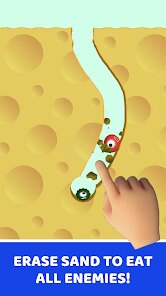
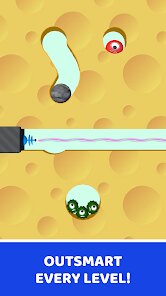
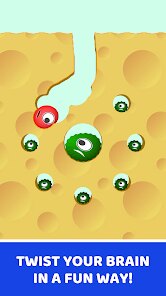
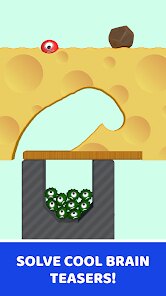
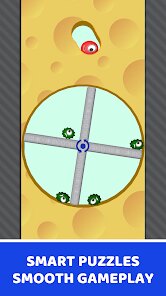
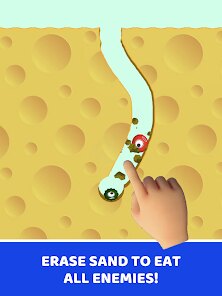
In-Depth Game Analysis
Hungry Balls, from the folks at HYPERCELL, is a real-time multiplayer arena game that drops you into a chaotic world where survival hinges on one simple rule: eat or be eaten. It's an evolution of the classic .io genre—think Agar.io but with a sharper edge, more tactical depth, and a visual punch that's impossible to ignore. The core loop is deceptively simple: you control a ball, absorb smaller ones to grow, split to chase down prey, and avoid the bigger fish circling the map. It's not just a mindless munching spree, though. The game layers in special abilities, environmental hazards, and a ranking system that keeps you coming back for “one more match.” If you're a fan of fast-paced PvP, bite-sized sessions, or just love the dopamine hit of leaderboard climbing, this one's a no-brainer. I first stumbled on it through a friend's clip on social media—the frantic split-second decisions and the neon-drenched battlefield looked like pure adrenaline, and honestly, the hype was justified.
My first session was a blur of learning through pain. I got eaten about a dozen times before I even figured out the boost mechanic, and the learning curve is steeper than the bright colors suggest. But here's the thing: that initial frustration quickly turned into obsession. The controls feel tight once you get the hang of them—mouse to move, space to split, shift to boost—and the response time is buttery smooth, even on a mid-range laptop. What really won me over was a moment in my third hour of play. I was a medium-sized ball, sandwiched between a giant on my left and a swarm of tiny ones on my right. I baited the giant into a narrow corridor, split into two, and dodged his lunge just in time to watch him crash into a spiked wall that shredded him. I then gobbled up his remains while the tiny ones scattered. That level of tactical comeback is rare in casual games. The level design, with its rotating obstacles and teleport pads, keeps matches unpredictable, and the UI is clean—no clutter, just your size, your rank, and the leaderboard. A quick settings tweak to lower particle effects made everything crisper, and I'd recommend that for anyone with an older rig.
I've played my fair share of .io titles and battle royale-lites, from Slither.io to more obscure indie fare, and Hungry Balls stands out because it respects your time. Matches never drag past five minutes, so you never feel locked into a losing streak, and the progression feels earned. Unlike many free-to-play games that punish you with pay-to-win mechanics, every upgrade here is tied to skill—you can grind for cosmetics, but they don't affect gameplay. The ranking system rewards aggressive play but doesn't screw over defensive players; you can climb by outsmarting, not just outgrowing. That balance is why I kept coming back. It's not perfect—the tutorial is woefully thin, and you'll die a lot before things click—but it nails the core fantasy of being a tiny underdog one second and a god-tier predator the next. For anyone who's ever loved the thrill of a chaotic free-for-all, this is a gem that deserves more than a passing glance.
Core Gameplay Features
- Split Mechanic 💥: Press space to split your ball into two halves, letting you chase down smaller opponents or escape bigger threats by shooting yourself in the opposite direction. It's risky—splitting halves your mass on each piece, making you more vulnerable—but it's the key to pulling off clutch plays.
- Environmental Hazards 🌀: The arena isn't just empty space. Spiked walls, moving crushers, and gravity wells add a layer of map awareness that forces you to think beyond “eat the small ones.” A well-timed bait can send a bigger ball crashing into a hazard, turning the tables instantly.
- Power-Up Drops 🎁: Randomly spawning power-ups give you temporary boosts like speed bursts, mass multipliers, or a shield that blocks one hit. They spawn in contested zones, so grabbing one often means fighting for it, which keeps the mid-game intense and rewards bold positioning.
Strengths & Highlights
- Adrenaline-Fueled Comebacks 🔥: There's nothing better than being one step from death, splitting to dodge a killer, and then swallowing their remains as they slam into a wall. The game is built for those heart-racing reversals, and every match has at least one moment that makes you yell at your screen.
- Skill Over Wallet 💪: I'm a free player, and I never felt second-class. Cosmetics are purely visual, and all gameplay-affecting items are earned through play. That's rare in modern multiplayer games, and it's a huge reason I trust the devs and stick around.
- Short Session, Big Reward ⏱️: With matches capped at a few minutes, it's perfect for lunch breaks or quick gaming sessions. You always get a satisfying arc—start small, grow, and either dominate or die trying—without the fatigue of a 30-minute commitment.
Limitations to Consider
- Bottom-Heavy Tutorial 📖: The game throws you into the deep end with barely a whisper of instruction. I died dozens of times before understanding split-cancelling and boost efficiency. A proper tutorial or practice mode would save new players a ton of frustration.
- Server Consistency 🌐: On peak hours, the matchmaking is fine, but off-peak times can put you in lobbies with obvious lag or bots. It kills the immersion when a smooth match turns into rubber-banding chaos. A better server selection option would help.
- Limited Map Variety 🗺️: There are only a couple of arena layouts, and after a while, you memorize every corner and hazard placement. I'd love to see a rotating roster of maps or a weekly modifier to keep the formula feeling fresh beyond the core loop.
Recommended Apps
![]()
Halloween: Secret of Shadow
HFG Entertainments4.5

![]()
Disco Fighter: Dead Fight Club
Wawe Technology0![]()
Swamp Attack
Outfit7 Limited4.6![]()
Monster Craftsman Survivor 3D
DINO GAME4.7![]()
Smashero.io - Hack n slash RPG
KLASH Games Inc.4.7![]()
Slice Master : Idle Clicker
Oreon Studios4.6![]()
MECCHA CHAMELEON
PlayLand Studio0![]()
Garten of Banban 2
Euphoric Brothers Games4![]()
Bike Race: Racing Game
iKame Games - Zego Studio4.6![]()
Hapunan Horror Game
2002 Studio4.3![]()
MiniGiants.io
Night Steed S.C.4.4![]()
Peppa Pig by PlayShifu
PlayShifu3.2![]()
Squishy Magic: ASMR Toy Maker
Dramaton4.6![]()
Gangster Simulator Crime Game
Orbit Games Pvt Ltd3.3![]()
Squid Game: Unleashed
Netflix, Inc.4.4











You May Like
-
![]()
IQ Test
Aliaksandr Uvarau4 -
![]()
MONOPOLY GO!
Scopely4.6 -
![]()
Race Master 3D: Car Racing
Beresnev Games4.5 -
![]()
Steal a Brainbot
finik0 -
![]()
World of Peppa Pig: Kids Games
Find Your Fun3.4 -
![]()
Minefun İo
3Dmobiles0 -
![]()
Stealth Master: Assassin Ninja
SayGames Ltd4.3 -
![]()
Witch Match Puzzle: Halloween
JULYis4.6 -
![]()
My Talking Angela 2
Outfit7 Limited4.4 -
![]()
Haunt the House: Terrortown
SFB Games4.9 -
![]()
Solo Survivor IO Game
FALCON GAME4.7 -
![]()
Arknights
Yostar Limited.4.5 -
![]()
Chapters: Interactive Stories
Crazy Maple Studio Dev4.4 -
![]()
ZooTone: Animal Voice Fun
JUP Game Studio4.5 -
![]()
eFootball™
KONAMI4.2