
Dead Disco Fighter
Meowcraft
Installs
Developer
Meowcraft
-
Category
Music
-
Content Rating
Everyone
Developer Email
Privacy Policy
https://www.privacypolicies.com/live/17099c78-50c8-4082-b913-508e2757ca3b
Screenshots

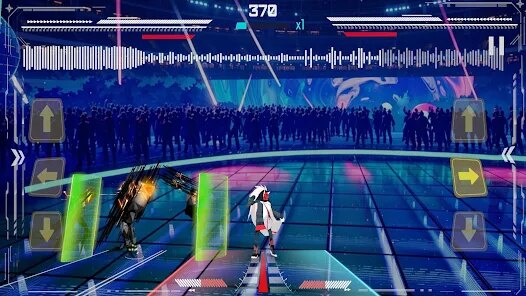
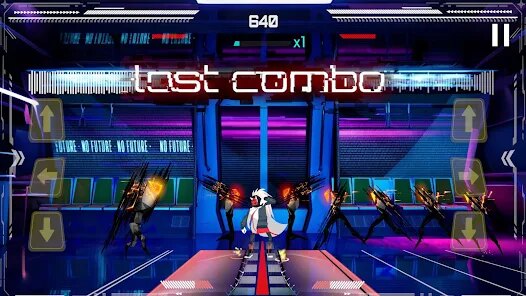
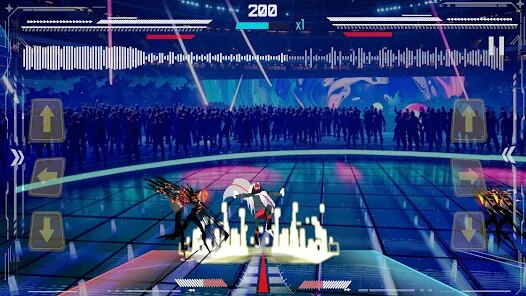
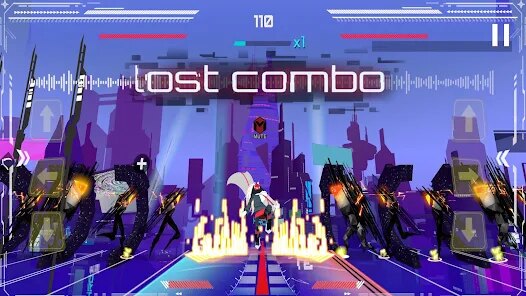
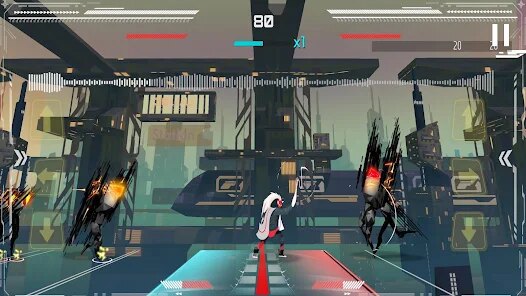
In-Depth Game Analysis
Dead Disco Fighter, from the indie studio Meowcraft, is a rhythm-based action roguelike that mashes together hectic twin-stick shooting with a pulsating electronic soundtrack. The core loop is deceptively simple: you move to the beat, your weapons fire to the beat, and enemies attack in sync with the music. It's a genre hybrid that sits squarely on the edge of action, rhythm, and strategy, and it's crafted for players who enjoy a challenge that demands both twitch reflexes and a sense of timing. If you've ever played Crypt of the NecroDancer or Thumper, you'll have a rough idea of what to expect, but Dead Disco Fighter twists that formula with a more arcade-style, bullet-hell presentation. It's not really for pure casual gamers looking for a relaxing session; this is for folks who love mastering patterns, optimizing builds, and feeling the synergy between their actions and the music. What initially caught my attention was a clip on social media showing a boss fight where the entire arena pulsed with neon lights synchronized to a heavy bassline — it looked like a cyberpunk rave turned into a battlefield, and I knew I had to try it.
My first hour with the game was honestly a bit rough. The learning curve is steep because you're not just dodging bullets; you're doing it in a rhythmic cadence. It took me a while to get used to the fact that your main shot only fires on the downbeat, which means you have to plan your strafing and shots around the music, not just react to what's on screen. The controls themselves are tight and responsive — no input lag, which is crucial for a game like this. However, the performance on my mid-range PC was solid, with a steady 60fps even during chaotic boss encounters. One moment that truly stood out was a late-level stage where a giant disco ball descended from the ceiling and shattered, its fragments forming a grid of light beams that created a temporary safe zone. I had to weave through the collapsing beams while a bass drop hit, and for a few seconds, the timing of my dodges literally felt like part of the track. That moment of pure flow — where the levels, damage patterns, and music all clicked — is what kept me hooked. I also discovered that turning on the "beat flash" setting (which highlights the exact frame you should fire) made a huge difference in my accuracy, though it made the screen feel busier. The progression system also kept me invested; you unlock new modifiers and weapons after each run, which encouraged me to experiment with different loadouts even when I failed early.
I've played a fair number of rhythm-action hybrids over the years, from Beat Hazard to Osu!, but Dead Disco Fighter felt different because it actually solves a major problem in the genre: making the rhythm genuinely matter for survival. In many similar games, the music is just background noise; here, it's the core timer for enemy attacks, environmental hazards, and your own offensive output. That design choice forces you to learn the tracks almost by heart, transforming each run from a reaction test into a piece of choreography. What made me stick with it over other roguelikes was the lack of arbitrary difficulty spikes — when I died, I usually knew exactly which beat I missed or where I over-extended, which felt fair. It's also refreshingly anti-pay-to-win; there are no microtransactions or loot boxes, just pure skill and strategy. This game won't appeal to everyone — if you hate electronic music or can't stand playing with sound on, you'll be at a severe disadvantage, and some might find that restrictive. But for those who appreciate a game that demands total audio-visual attention, Dead Disco Fighter delivers a unique, adrenaline-pumped experience that earns its place among the better genre experiments of recent years.
Core Gameplay Features
- Beat-Synced Combat 🎵 Your weapon only fires on the musical beat, forcing you to move and attack in rhythm. This turns every encounter into a dance, punishing panic firing and rewarding foresight as you plan your shots around the audio track.
- Dynamic Soundtrack 🎧 The music adapts in intensity based on your combo meter and the stage's threat level. The bass drops during boss fights, and the tempo subtly shifts when you're near death, keeping the audio feedback informative and immersive.
- Modular Upgrades 🛠️ Between runs, you spend credits to unlock weapon chips and passive modules, but they only drop after certain combo milestones. This encourages you to maintain your beat-hitting streak rather than just farming enemies, adding a strategic layer to how you approach each level.
- Neon Arena Design 🌟 Each stage is a geometric nightmare of glowing platforms and spinning lasers, with enemy bullet patterns often mirrored in the background visuals. The arenas aren't just pretty set dressing; they change shape mid-fight, adding environmental puzzles to the chaos.
Strengths & Highlights
- Intense Audio Flow 🎶 The moment where your visual dodges and auditory cues sync perfectly is pure satisfaction. It's rare to feel so physically connected to a game's soundtrack, and when you nail a perfect run, it feels more like a live performance than button-mashing.
- Fair Challenge Curve ⚖️ The game never sends you against an enemy you can't avoid with proper timing. Even on the steepest difficulty, death always felt like a learning experience about a specific pattern—never an unfair stacked deck or a cheap shot from off-screen.
- Replayability via Synergy 🔄 Different weapon chips can interact with each other in surprising ways—like a spread shot that leaves shockwaves on the beat or a laser that grows stronger with every perfect dodge. Experimenting with these builds makes each run feel personalized and encourages trying crazy combos just to see what fires off.
Limitations to Consider
- Niche Appeal of Music Requirement 🎚️ Playing with muted audio or while listening to your own music ruins the experience completely. The game's core mechanics are tied to its soundtrack, so anyone who prefers playing in silence or with podcasts in the background will find it unplayable—it's a hard line that narrows its audience.
- Lack of Practice Mode 🏋️ There's no free-play arena to test specific weapons or enemy patterns without restarting a full run. When you finally unlock a powerful chip, you have to survive multiple stages to even try it against a certain boss, which can be time-consuming and frustrating.
- Repetitive Boss Visuals 👾 While the mechanics differ, many bosses share a similar humanoid silhouette with orange and red color schemes. After a few hours, the visual variety blurs together, making it harder to remember which boss does what at a glance compared to their unique soundtracks.
Recommended Apps
![]()
Halloween: Secret of Shadow
HFG Entertainments4.5

![]()
Disco Fighter: Dead Fight Club
Wawe Technology0![]()
Swamp Attack
Outfit7 Limited4.6![]()
Monster Craftsman Survivor 3D
DINO GAME4.7![]()
Smashero.io - Hack n slash RPG
KLASH Games Inc.4.7![]()
Slice Master : Idle Clicker
Oreon Studios4.6![]()
MECCHA CHAMELEON
PlayLand Studio0![]()
Garten of Banban 2
Euphoric Brothers Games4![]()
Bike Race: Racing Game
iKame Games - Zego Studio4.6![]()
Hapunan Horror Game
2002 Studio4.3![]()
MiniGiants.io
Night Steed S.C.4.4![]()
Peppa Pig by PlayShifu
PlayShifu3.2![]()
Squishy Magic: ASMR Toy Maker
Dramaton4.6![]()
Gangster Simulator Crime Game
Orbit Games Pvt Ltd3.3![]()
Squid Game: Unleashed
Netflix, Inc.4.4










You May Like
-
![]()
IQ Test
Aliaksandr Uvarau4 -
![]()
MONOPOLY GO!
Scopely4.6 -
![]()
Race Master 3D: Car Racing
Beresnev Games4.5 -
![]()
Steal a Brainbot
finik0 -
![]()
World of Peppa Pig: Kids Games
Find Your Fun3.4 -
![]()
Minefun İo
3Dmobiles0 -
![]()
Stealth Master: Assassin Ninja
SayGames Ltd4.3 -
![]()
Witch Match Puzzle: Halloween
JULYis4.6 -
![]()
My Talking Angela 2
Outfit7 Limited4.4 -
![]()
Haunt the House: Terrortown
SFB Games4.9 -
![]()
Solo Survivor IO Game
FALCON GAME4.7 -
![]()
Arknights
Yostar Limited.4.5 -
![]()
Chapters: Interactive Stories
Crazy Maple Studio Dev4.4 -
![]()
ZooTone: Animal Voice Fun
JUP Game Studio4.5 -
![]()
eFootball™
KONAMI4.2