
Halloween Chronicles 4 f2p
Do Games Limited
Installs
100K+
Developer
Do Games Limited
-
Category
Casual
-
Content Rating
Everyone 10+
Developer Email
Privacy Policy
https://dominigames.com/privacy-policy
Screenshots
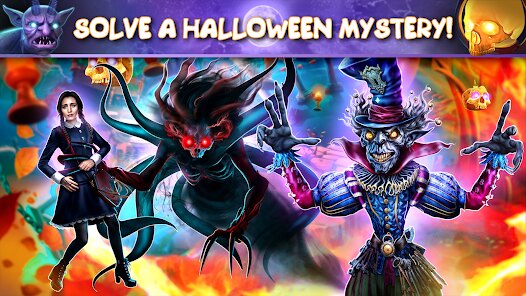
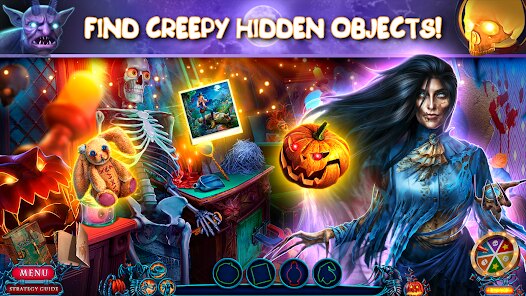
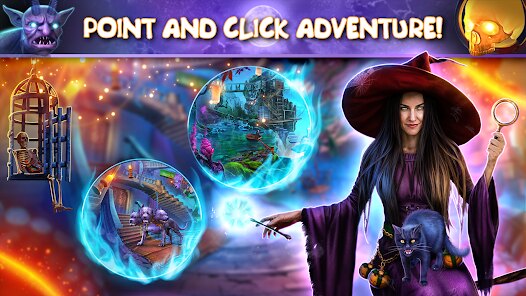
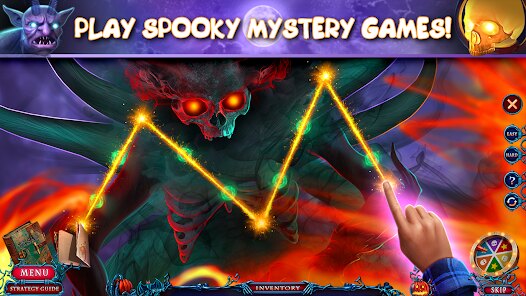
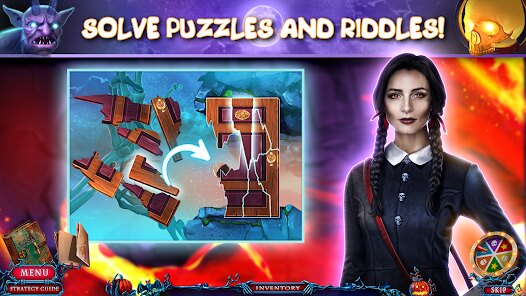
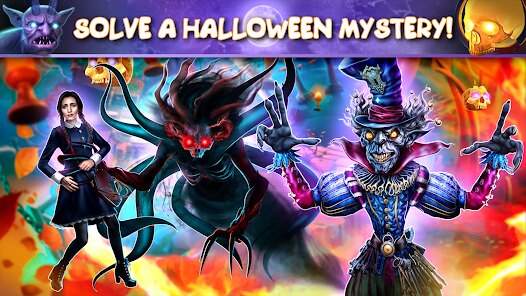
In-Depth Game Analysis
Halloween Chronicles 4 is a hidden-object puzzle adventure that drops you into a cursed, candy-choked town where the Halloween spirit has gone horribly wrong. This is the fourth entry in Do Games Limited's free-to-play series, and it sticks firmly to the genre's tried-and-true recipe: explore hand-painted scenes, find cleverly concealed objects, solve logic-based mini-games, and chase a narrative that unfolds through collectible notes and character dialogue. If you're a fan of cozy mystery games, point-and-click adventures, or just someone who loves autumnal vibes with a spooky twist, this one's squarely aimed at you. What initially hooked me was the promotional artwork — that warm, slightly eerie palette of purples and oranges promised a cozy yet unsettling atmosphere, and I'd heard chatter in casual gaming circles that this installment finally refined the series' clunky edges. Being free-to-play, it also lowered the barrier for me to just jump in and see if the hype held water.
My first hour with Halloween Chronicles 4 was honestly a bit shaky — the tutorial hand-holds you through the first two scenes with excessive pop-ups, and I found myself wishing it would just let me loose. But once the training wheels came off, the charm clicked. The hidden-object scenes are genuinely well-crafted, with items tucked behind clever lighting and foreground clutter rather than just pixel-hunted nonsense. I had one standout moment in an abandoned greenhouse where I had to reassemble a shattered stained-glass window to reveal a key hidden behind it — the puzzle required rotating pieces and matching light refractions, and it felt more like a clever environmental riddle than a generic task. Performance wise, it ran buttery smooth on my mid-range laptop, with fast loading times and a responsive cursor that didn't lag. The learning curve for the core loop is gentle, but the branching side quests and optional collectible sets add a layer that keeps you moving between regions without feeling tedious. I did tweak the settings to lower the hint cooldown — that made the mid-game less frustrating when I got stuck on a particularly devilish object hunt. UI is clean, though the map screen could use a touch more spatial clarity; I occasionally wandered into zones I'd already exhausted.
Compared to other free-to-play hidden object games I've sunk hours into, like the older Mystery Case Files or the newer G5 titles, Halloween Chronicles 4 stands out because it respects your time. There's no energy bar throttling your play sessions — you can grind out three hours straight if you're in the zone, which is rare for the f2p segment. The scene variety is also head and shoulders above competitors; I counted over forty distinct locations, from a haunted carnival to a boggy marsh, and each feels hand-drawn with personality rather than recycled. What really kept me coming back, though, are the mini-games. They're not just samey slider puzzles — one had me brewing potions by matching ingredient symbols under a timer, another required me to navigate a ghostly rat through a maze while avoiding light beams. That diversity is what made me clock in over twelve hours across a week, which is way more than I typically give a casual title. If you're allergic to microtransaction nagging, this one is lighter than most, though it's not absent — but the core campaign is completable without spending a cent, and that's a win in my book.
Core Gameplay Features
- Adventure Mode 🕵️: This is the main campaign with a linear story that branches slightly based on which side quests you tackle first. You navigate a world map, each node representing a scene, and you'll need to find a certain number of hidden objects or solve a puzzle to unlock the next area. It strikes a good balance between guided progression and free exploration.
- Mini-Games 🧩: Sprinkled throughout, these deviate from the hidden-object formula to test logic, memory, or reflexes. Examples include pipe-connection challenges, lock-picking sequences with timing mechanics, and symbol-matching games that require quick observation. They reset if you fail, so there's no permanent penalty for a misstep.
- Collectibles 🍬: Scattered across scenes are candy corn tokens and lore notes. Gathering them isn't mandatory, but they unlock bonus content like concept art and extra backstory snippets that flesh out the Halloween town's curse. They add replay value for completionists, though they don't affect the main ending.
- Free-to-Play Economy 💰: The game uses energy points that refill over time, but they only gate the optional "bonus" scenes, not the main story. You can also watch short ads to earn instant energy refills or boosters like a "super hint" that highlights multiple objects. It's a fair exchange system compared to many peers.
- Hint System 💡: You get a limited pool of hints that regenerate slowly, but you can also earn them by completing side objectives. A hint will outline the silhouette of the next target object in a scene, which helps during particularly cluttered hunts. Using it doesn't penalize your score, which is a relief.
Strengths & Highlights
- Atmosphere 🎃: The art direction nails the Halloween vibe — every scene has warm lantern glows, fog effects, and subtle animated elements like bats fluttering or jack-o'-lanterns flickering. The audio soundtrack, with its low woodwind hums and occasional cackles, is a masterclass in setting mood without being annoying on repeat.
- Puzzle Variety 🎲: I never felt like I was grinding the same mechanic twice. The developers threw in word searches, jigsaws, ciphers, and even a musical sequence where I had to replicate a ghostly tune. That freshness is what made each session feel like a treat rather than a chore.
- No Paywall for Completion 🚫: You can finish the entire story arc without opening your wallet, as long as you're patient with energy refills. The wait times are short (roughly one energy every four minutes), and generous daily login bonuses gave me enough boosters to breeze through harder spots.
- Clean Interface 📱: The buttons are large, the inventory is logically sorted, and the journal tab conveniently tracks both active objectives and found notes. It's rare for a f2p game to get UX this right, but here, even my less tech-savvy cousin picked it up without needing a tutorial.
- Performance ⚡: Despite the rich visuals, load times stayed under three seconds on both my PC and an older tablet. There were no crashes or glitches in my entire playthrough, and frame rates remained stable even in the rain-soaked outdoor scenes with multiple particle effects.
Limitations to Consider
- Energy System Nagging 🔋: While completable free, the energy cap (I started with 50) can stop you mid-flow right at a tense moment, forcing a break. It's a standard f2p mechanic, but it does break immersion, and the ads to refill can feel intrusive if you're on a roll.
- Repetitive Voice Acting 🗣️: Only a handful of characters have voiced lines, and those repeat the same two or three phrases during interactions. The exaggerated "Ooooh!" and "Help me!" grow grating after the fifth encounter, and I eventually muted the dialogue audio and skimmed text instead.
- Linear Story Branching 📖: Despite the illusion of choice via side quests, the main plot follows a single, rigid path with a predictable twist around the two-thirds mark. If you're looking for meaningful narrative decisions, this isn't it — it's a linear story dressed up as an adventure.
- Hint Cooldown Too Long ⏳: While you earn hints, the base cooldown is five real minutes per hint, which felt punishing if I missed a tiny object like a needle in a haystack scene. The paid boosters help, but they shouldn't feel necessary for a basic flow.
- Minor Localization Issues 🌍: A few item names in the hidden-object lists don't match the visual (e.g., "sconce" for a candle holder), leading to confusion for non-native English speakers like me. It's not game-breaking, but it did cause one or two wrong clicks and head-scratching moments.
Recommended Apps
![]()
Halloween: Secret of Shadow
HFG Entertainments4.5

![]()
Disco Fighter: Dead Fight Club
Wawe Technology0![]()
Swamp Attack
Outfit7 Limited4.6![]()
Monster Craftsman Survivor 3D
DINO GAME4.7![]()
Smashero.io - Hack n slash RPG
KLASH Games Inc.4.7![]()
Slice Master : Idle Clicker
Oreon Studios4.6![]()
MECCHA CHAMELEON
PlayLand Studio0![]()
Garten of Banban 2
Euphoric Brothers Games4![]()
Bike Race: Racing Game
iKame Games - Zego Studio4.6![]()
Hapunan Horror Game
2002 Studio4.3![]()
MiniGiants.io
Night Steed S.C.4.4![]()
Peppa Pig by PlayShifu
PlayShifu3.2![]()
Squishy Magic: ASMR Toy Maker
Dramaton4.6![]()
Gangster Simulator Crime Game
Orbit Games Pvt Ltd3.3![]()
Squid Game: Unleashed
Netflix, Inc.4.4




You May Like
-
![]()
IQ Test
Aliaksandr Uvarau4 -
![]()
MONOPOLY GO!
Scopely4.6 -
![]()
Race Master 3D: Car Racing
Beresnev Games4.5 -
![]()
Steal a Brainbot
finik0 -
![]()
World of Peppa Pig: Kids Games
Find Your Fun3.4 -
![]()
Minefun İo
3Dmobiles0 -
![]()
Stealth Master: Assassin Ninja
SayGames Ltd4.3 -
![]()
Witch Match Puzzle: Halloween
JULYis4.6 -
![]()
My Talking Angela 2
Outfit7 Limited4.4 -
![]()
Haunt the House: Terrortown
SFB Games4.9 -
![]()
Solo Survivor IO Game
FALCON GAME4.7 -
![]()
Arknights
Yostar Limited.4.5 -
![]()
Chapters: Interactive Stories
Crazy Maple Studio Dev4.4 -
![]()
ZooTone: Animal Voice Fun
JUP Game Studio4.5 -
![]()
eFootball™
KONAMI4.2