
Halloween Chronicles: Family
Do Games Limited
Installs
100K+
Developer
Do Games Limited
-
Category
Casual
-
Content Rating
Teen
Developer Email
Privacy Policy
https://dominigames.com/privacy-policy/
Screenshots
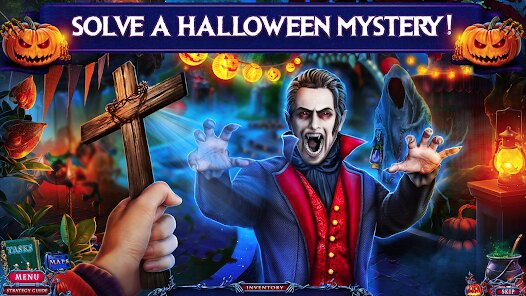
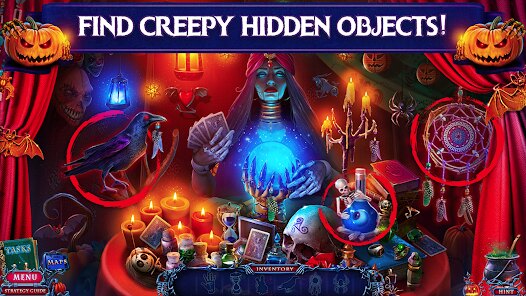
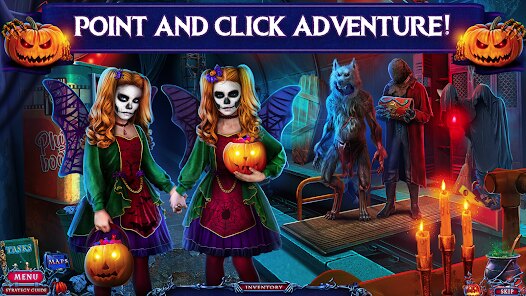
In-Depth Game Analysis
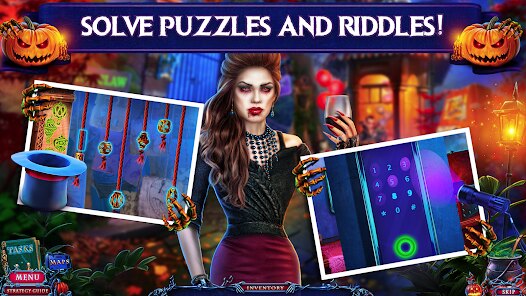
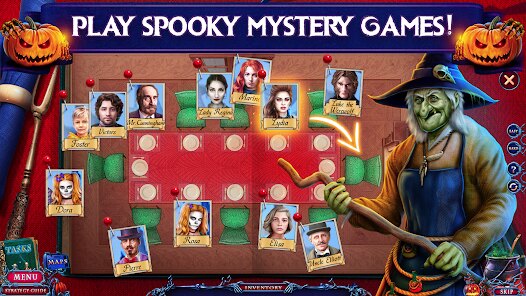
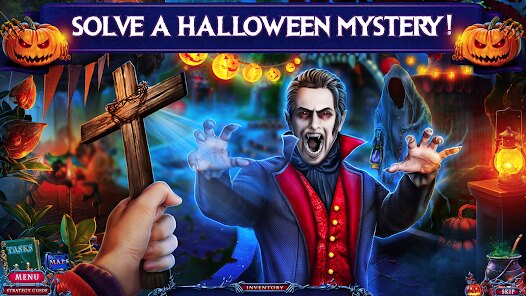
Halloween Chronicles: Family, from Do Games Limited, drops you into a spooky yet surprisingly heartfelt hidden-object adventure that blends classic point-and-click exploration with light puzzle-solving. It's a narrative-driven experience squarely aimed at fans of casual mystery games, particularly those who enjoy the "seek and find" genre but crave a story with more emotional weight than your average haunted house romp. If you've ever sunk hours into titles like Hidden Expedition or the Mystery Case Files series, you'll immediately recognize the DNA here, but the family-centric twist sets it apart from the usual jump-scare fare. What initially hooked me was the promise of a Halloween setting that wasn't just about gore—the promotional art hinted at a melancholic, almost cozy vibe, and I was curious to see if the gameplay could match that intriguing tonal shift.
Diving in, my first session was a slow burn, no doubt about it. The opening scenes are heavy on dialogue and atmospheric setup, which might frustrate players who want instant action, but I found it rewarding once the core loop clicked into place. The controls are impeccably smooth for a mobile port—tapping and dragging feels responsive, and I never once lost an item because of a finicky hitbox. Performance-wise, the game ran like a dream on my mid-range tablet, with no noticeable lag or crashes. The standout moment for me came about an hour in, during a sequence where you're piecing together a shattered family portrait through a cleverly integrated mini-game. As each fragment snapped into place, it unlocked a poignant memory that recontextualized the entire mystery. That's when I realized this wasn't just a scavenger hunt; it was a story about loss and reconciliation dressed up in Halloween costumes. The learning curve is gentle, but the difficulty ramps up intelligently—the hidden-object scenes start obvious and become deviously cluttered, forcing you to genuinely scan every inch of the screen. I did tweak the settings early on to reduce the ambient audio, which is gorgeous but can get overwhelming during tense puzzle sections.
As someone who has burned through dozens of similar titles, I kept coming back to this one because of its pacing. Too many hidden-object games pad their runtime with filler scenes or recycled assets, but Halloween Chronicles: Family respects your time. The progression system never feels grindy; every solved puzzle directly feeds into the narrative, and the branching dialogue options—while not massive in scope—gave me a sense of agency that's rare in this genre. Compared to competitors like Haunted Hotel or Grim Tales, this entry shines with its character writing. The NPCs aren't cardboard cutouts; they have genuine motivations, and the central conflict between two estranged siblings feels earned rather than contrived. It also sidesteps the pay-to-win traps that plague mobile games—I never once hit a paywall that blocked critical story progression, and the in-app purchases are purely cosmetic. For fans of thoughtful, story-first casual gaming, this is a gem. That said, if you're a hardcore puzzle purist who scoffs at hidden-object scenes, this will likely feel too light. But for the rest of us, it's a beautifully crafted escape that understands what makes this genre tick.
Core Gameplay Features
- Hidden-Object Scenes 🕵️: Each scene is hand-drawn with meticulous clutter, where you're tasked to find specific items from a list. What makes it special is the dynamic interaction—some items are hidden inside others (like opening a book to find a key) or require combining two objects to become visible. This prevents the monotony of pure visual scanning.
- Memory Puzzle Integration 🧩: The game cleverly weaves the story into its puzzle design. Collecting "memory fragments" from mini-games reveals lore about the family's past, turning what could be generic brain-teasers into emotional storytelling beats. Each completed puzzle feels like you're uncovering a new chapter, not just clearing a level.
- Dialogue Choices 🗣️: You occasionally get to pick how the protagonist responds to other characters. This isn't a sprawling RPG dialogue tree, but your choices subtly affect how NPCs react and which side quests unlock. It adds a lightweight layer of role-playing that keeps the narrative feeling fresh on a second playthrough.
- Bonus Scene Unlocks 🔑: After completing the main campaign, a separate "bonus chapter" unlocks, offering a new perspective on the story. This isn't a lazy rehash—it introduces brand-new puzzles and locations, extending the playtime by roughly two hours without feeling like padding.
- Interactive Map Navigation 🗺️: Instead of a linear point-A-to-B path, you access a stylized map that lets you fast-travel between multiple locations. This encourages exploration and backtracking for missed items, giving you a sense of ownership over the environment rather than just following a single hallway.
Strengths & Highlights
- Atmospheric Storytelling 🎃: The game nails its "haunted but heartfelt" tone. The soundtrack mixes eerie strings with warm piano melodies, and the art direction uses muted oranges and deep purples that feel like a crisp autumn evening. The narrative never over-eggs the horror, instead focusing on the emotional stakes—I genuinely cared about the family's fate by the midpoint.
- Respectful Difficulty Curve 📈: Puzzle difficulty scales organically without artificial spikes. Early scenes teach you the mechanics, while late-game challenges require lateral thinking. I never felt stupid, but I also never breezed through—there's a sweet spot that keeps you engaged without rage-quitting.
- Smooth Technical Performance ⚙️: From load times to touch response, everything feels polished. I played on both a phone and a tablet, and the UI scaled beautifully on both screens. No crashes, no lost progress, and the auto-save feature kicked in reliably even after I accidentally closed the app mid-level.
- Replayable Content 🎮: Beyond the bonus chapter, there are collectible tarot cards scattered across the main game that hint at lore. Finding them all encourages a second run, and the dialogue choices mean you can see slightly different scenes. For a casual game, it offers surprising longevity.
- No Timed Fails ⏳: Unlike similar titles that punish slow players with timers, this game lets you take your time. The hidden-object scenes have no ticking clock, and puzzles can be restarted infinitely. This makes it perfect for unwinding after work instead of adding stress to your day.
Limitations to Consider
- Linear Story Branching 🌲: While the dialogue choices exist, they don't dramatically alter the main plot's endgame. The "branching" feels more like a scenic detour than a real fork in the road. I hoped for different endings based on my choices, but instead, I got the same conclusion with slightly different flavor text—a missed opportunity for true replayability.
- Padding in Late Chapters 📉: The final two chapters introduce a few "find three of these items" tasks that feel artificially stretched. They involve backtracking to already-explored locations, which breaks the narrative momentum just as the story reaches its climax. A bit of trimming would keep the pacing tight.
- Voice Acting Inconsistency 🎙️: Some characters have crisp, professional voice work, while others sound flat or hastily recorded. One particularly important NPC—the ghostly mother—delivers her lines with a robotic cadence that cuts through the game's otherwise immersive atmosphere. It's a jarring mismatch that distracts during emotional scenes.
- Limited Onboarding for Newcomers 📖: If you've never played a hidden-object game before, the tutorial is a bit sparse. It teaches you the basics but skips over advanced mechanics like item combination or using inventory items on the environment. I had to figure these out through trial and error, which might frustrate casual players picking up the game cold.
- Occasional Cluttered UI 🗂️: During fast-paced puzzle sequences, the inventory bar at the bottom can overlap with interactive hotspots on smaller phone screens. I accidentally tapped out of a scene twice because I hit the map button instead of a highlighted object. A toggle to minimize the UI would solve this.
Recommended Apps
![]()
Halloween: Secret of Shadow
HFG Entertainments4.5

![]()
Disco Fighter: Dead Fight Club
Wawe Technology0![]()
Swamp Attack
Outfit7 Limited4.6![]()
Monster Craftsman Survivor 3D
DINO GAME4.7![]()
Smashero.io - Hack n slash RPG
KLASH Games Inc.4.7![]()
Slice Master : Idle Clicker
Oreon Studios4.6![]()
MECCHA CHAMELEON
PlayLand Studio0![]()
Garten of Banban 2
Euphoric Brothers Games4![]()
Bike Race: Racing Game
iKame Games - Zego Studio4.6![]()
Hapunan Horror Game
2002 Studio4.3![]()
MiniGiants.io
Night Steed S.C.4.4![]()
Peppa Pig by PlayShifu
PlayShifu3.2![]()
Squishy Magic: ASMR Toy Maker
Dramaton4.6![]()
Gangster Simulator Crime Game
Orbit Games Pvt Ltd3.3![]()
Squid Game: Unleashed
Netflix, Inc.4.4









You May Like
-
![]()
IQ Test
Aliaksandr Uvarau4 -
![]()
MONOPOLY GO!
Scopely4.6 -
![]()
Race Master 3D: Car Racing
Beresnev Games4.5 -
![]()
Steal a Brainbot
finik0 -
![]()
World of Peppa Pig: Kids Games
Find Your Fun3.4 -
![]()
Minefun İo
3Dmobiles0 -
![]()
Stealth Master: Assassin Ninja
SayGames Ltd4.3 -
![]()
Witch Match Puzzle: Halloween
JULYis4.6 -
![]()
My Talking Angela 2
Outfit7 Limited4.4 -
![]()
Haunt the House: Terrortown
SFB Games4.9 -
![]()
Solo Survivor IO Game
FALCON GAME4.7 -
![]()
Arknights
Yostar Limited.4.5 -
![]()
Chapters: Interactive Stories
Crazy Maple Studio Dev4.4 -
![]()
ZooTone: Animal Voice Fun
JUP Game Studio4.5 -
![]()
eFootball™
KONAMI4.2